Granular activated carbon (GAC) is one of the most widely used media filtration technologies in drinking water treatment, relied on for decades to remove both known and emerging organic contaminants. Due to its effectiveness, ease of use, and broad availability, the U.S. EPA lists GAC as a best available technology (BAT) for a range of contaminants – including PFAS. Depending on the influent water quality and operating conditions, virgin GAC can provide tens of thousands of treated bed volumes – often years of service – before replacement is needed. When a changeout is required, utilities must determine how to manage the spent media and select a strategy that minimizes contaminants being reintroduced into the environment.
Four primary disposal pathways exist: landfilling, incineration, regeneration, and reactivation. Among these, reactivation offers the broadest range of benefits, from cost-effectiveness to reduced environmental impact. Yet misconceptions regarding carbon reactivation persist, making it essential to understand the facts before selecting the best strategy for your treatment goals. Below are four essential truths about carbon reactivation.
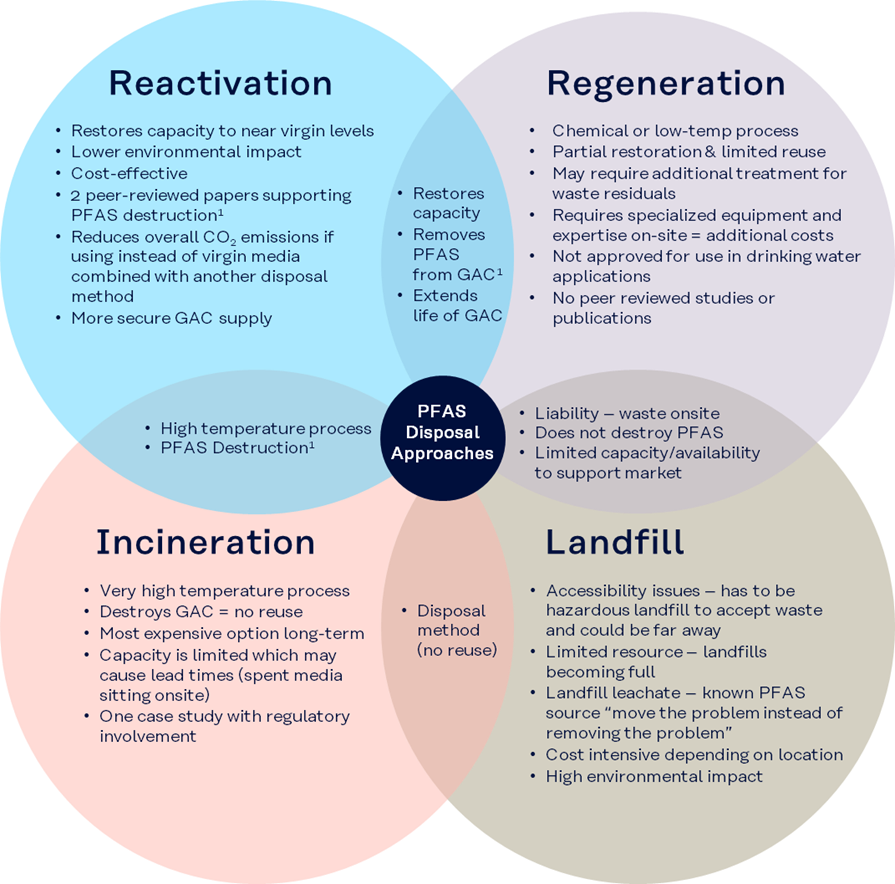
Figure 1. Venn diagram illustrating the differences between the four primary disposal pathways of reactivation, regeneration, incineration, and landfilling.
Truth #1: Reactivation Is Not Regeneration… And That Distinction Matters!
Although the terms are often used interchangeably, reactivation and regeneration are fundamentally different processes – and the differences have real implications. Reactivation is performed at much higher temperatures, allowing for greater removal and destruction of contaminants, including PFAS, and restoring the adsorption capacity to near virgin levels. By contrast, regeneration occurs at a lower temperature, often requiring a chemical process that transfers PFAS and other contaminants from the carbon to a liquid waste stream. This liquid waste stream must then be treated with a proven destruction technology. In short, reactivation is a one-step process that is both more effective and more efficient than regeneration.
Truth #2: Reactivated GAC Can Perform At The Level Of Virgin GAC
A common misconception is that reactivated carbon is inherently inferior to virgin carbon. The data shows otherwise. Testing consistently demonstrates that reactivated GAC can match, and in some cases exceed, the performance of virgin media. Breakthrough curves for PFOA illustrate the similarity in performance between virgin and reactivated bituminous coal-based GAC (see Figure 2). One contributing factor is the reopening of adsorption sites during the high-temperature thermal reactivation process. When media quality is properly monitored, GAC characteristics and performance can be maintained over multiple reactivation cycles. Utilities therefore do not have to choose between sustainability goals and water quality; reactivated GAC delivers the same level of protection as virgin media.
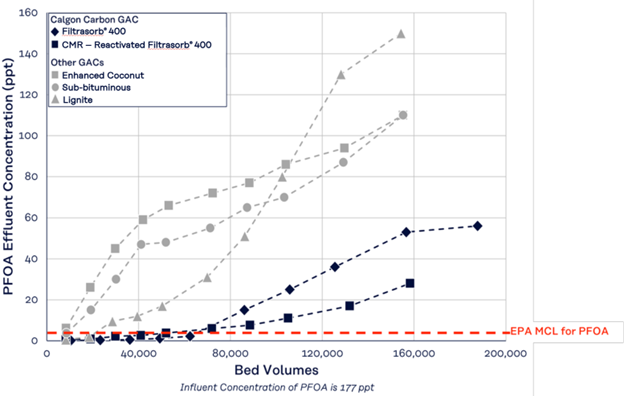
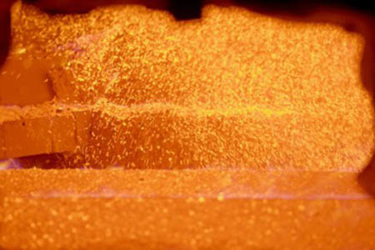
Photo courtesy of Calgon Carbon Corporation
Figure 2. This breakthrough curve illustrates the performance parity between virgin bituminous coal-based granular activated carbon (Filtrasorb® 400) and its reactivated counterpart in removing PFOA. Both media types significantly outperform alternative carbons — such as lignite, sub-bituminous, and enhanced coconut — by maintaining PFOA effluent concentrations below the EPA MCL for a substantially higher number of bed volumes.
Truth #3: GAC Reactivation Is A Cost-Effective Strategy For Your Budget
Reactivation delivers significant cost savings for utilities because it restores spent GAC’s removal capacity, eliminating the recurring expense of purchasing virgin media for each changeout cycle. In contrast, both incineration and landfilling increase cost and prevent media reuse. Incineration destroys the carbon entirely, forcing a full media replacement; landfilling places spent GAC into the ground without eliminating PFAS, adding long-term liability.
By reusing the same carbon rather than discarding it, reactivation avoids these expenses altogether, making it the more economical option. The budget impact is substantial: custom municipal reactivated carbon can cost up to 25% less than virgin GAC combined with incineration, largely because it requires fewer manufacturing steps and avoids outright disposal costs. In addition to lowering costs, reactivation delivers an estimated 80% reduction in carbon dioxide emissions compared to manufacturing new virgin media – a valuable benefit for utilities working toward their sustainability goals. And because reactivation returns GAC to a near-virgin state, it delivers a lower total cost of ownership while reducing environmental and regulatory burdens. The result is meaningful operational savings – making reactivation the most financially advantageous long-term strategy for managing spent GAC.
Truth #4: Verifying The Reactivation Process Is Crucial
Not all reactivation processes are created equal, and ensuring quality requires transparency and scientific validation. Peer-reviewed studies remain the gold standard because they undergo rigorous evaluation by independent subject matter experts and demand validated, repeatable results. Calgon Carbon has published two peer-reviewed studies on full-scale GAC reactivation systems, positioning the company as a leading authority on the process. Choosing a provider backed by published research gives utilities greater confidence in the reliability and performance of reactivated carbon.
In the most recent study, state-of-the-art EPA methodologies, including OTM-45, OTM-50, and EPA Method 0010, verified that Calgon Carbon’s reactivation process removed PFAS from spent GAC to below detectable levels1. The analyzed products of incomplete combustion/destruction (PICs/PIDs) and reformed PFAS measured using OTM50 and EPA Method 0010 were nondetectable at both the kiln outlets and at the stack, reinforcing the robustness of the reactivation process.1
As regulations tighten, operating costs rise, and sustainability expectations grow, utilities must be increasingly strategic about how they manage their spent GAC. Carbon reactivation is a proven strategy that restores adsorption capacity for reuse, destroys contaminants such as PFAS, reduces environmental impact, and lowers lifecycle costs. By understanding the essential truths behind reactivation, separating facts from misconceptions, and partnering with providers who can scientifically validate their processes, utilities can move forward with confidence in their GAC management strategy.